
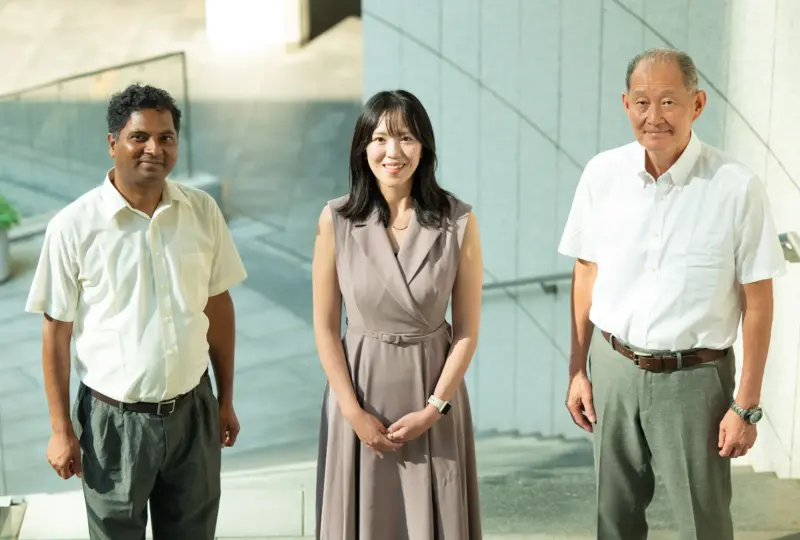
From left: Ghosh Prosenjit Kumar, Mizuki Takahashi, and Masato Suzuki of OC Global
Photo by Yuuko Kawashima
What should you do when conflicting opinions arise in a team aiming to “build a bridge that elephants can cross?”
We asked how to leverage Inclusion & Diversity (I&D).
Consultants Share the Successes of Senior and Foreign Employees:
Why Inclusion & Diversity Are Essential for Project Success.
In an era where young professionals, seniors, and foreign nationals work together, OC Global, a comprehensive consulting firm says, “diverse talent recruitment is essential for project success.”
What is Inclusion & Diversity as practiced by OC Global, which has undertaken over 3,000 projects across 150 countries worldwide, primarily through Official Development Assistance (ODA)? We asked three employees: a junior staff member, a senior staff member, and a foreign national.
Q. First, please tell us about your work.
Suzuki (hereafter referred to without honorifics):
I am currently 68 years old and continue working as a senior employee after retirement. My specialty is port-related surveys, planning, design, and construction supervision. I have over 40 years of experience primarily in overseas projects such as in the Philippines, and am currently handling a project in Kenya, Africa.
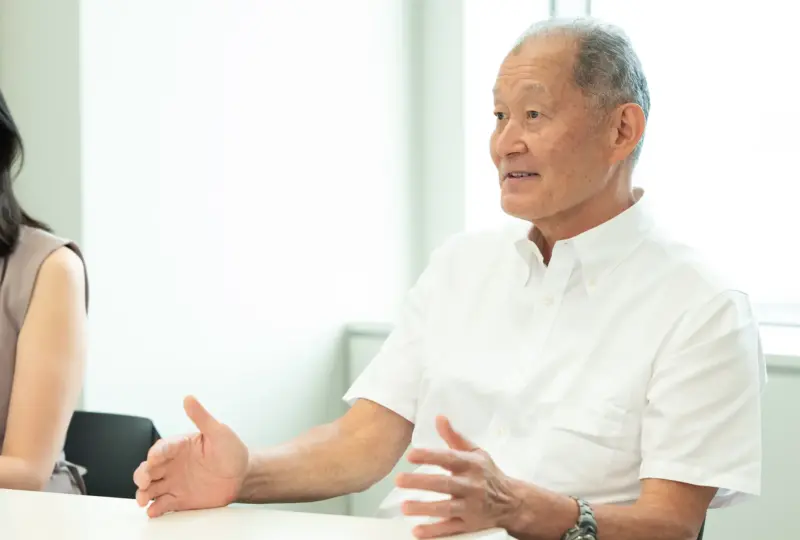
Masato Suzuki: Senior Advisor, OC Global Port Division. Specializes in port and marine civil engineering. Joined Pacific Consultants International, OC Global’s predecessor, in 1979; transferred to OCG in 2008. Over 40 years of experience in overseas projects in Panama, the Philippines, Tonga, Kenya, and other countries.
Photo by Yuuko Kawashima
Takahashi (hereafter referred to without honorifics):
I joined the company as a new graduate in 2013, specializing in environmental and social considerations. Within the infrastructure business, I handle environmental assessments and the creation of resident relocation plans. After a two-year domestic assignment at a group company in Japan, I gained experience on projects in about ten countries, including Myanmar. Most recently, I’ve been working with Ghosh on a road improvement project in Bangladesh.
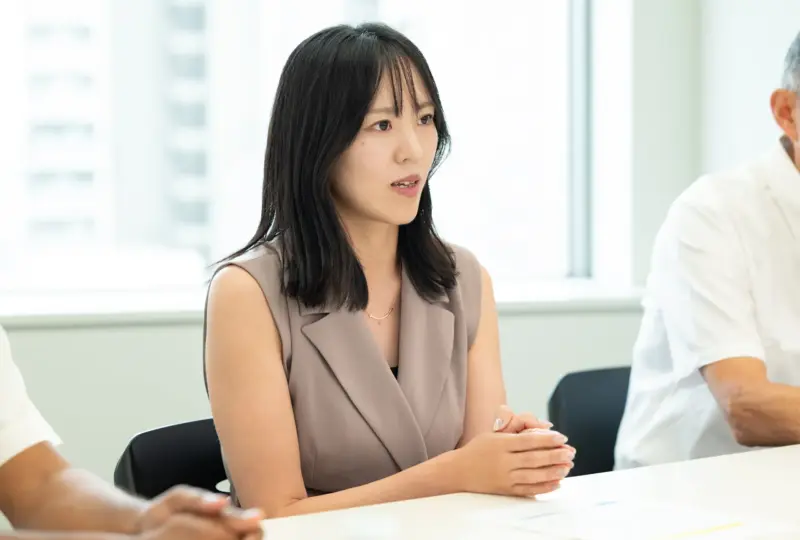
Mizuki Takahashi: Manager, Road Planning Department, OC Global. Joined OC Global as a new graduate in 2013. Specializes in environmental and social considerations. Has experience in environmental assessments and formulating resettlement plans for road and bridge projects, primarily in Myanmar and Bangladesh.
Photo by Yuuko Kawashima
Ghosh (hereafter referred to without honorifics):
I joined the company in 2011, specializing in structural engineering. After initially working on project proposals in Vietnam, I gained experience conducting surveys and designing projects for JICA initiatives in my home country, Bangladesh. Since 2024, I have been based in Tokyo, working in the Road Transportation Division.
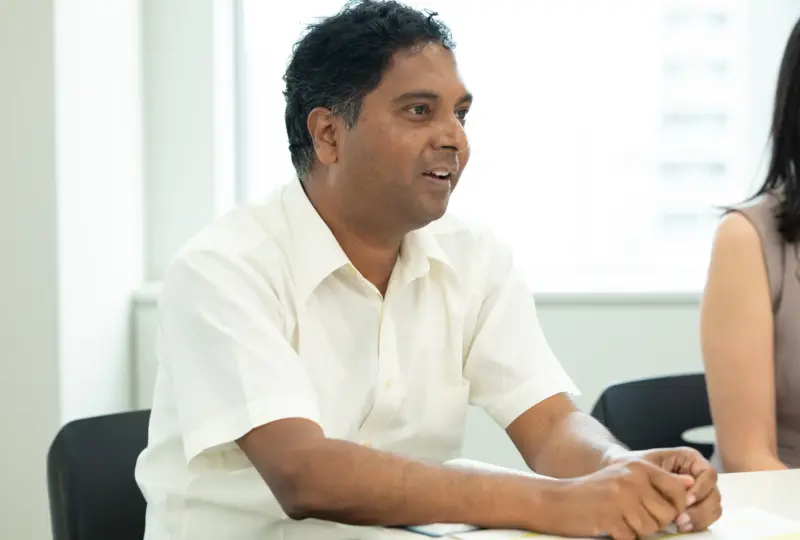
Ghosh Prosenjit Kumar: Manager of the OC Global Road Engineering Department. Joined OC Global in 2011. Specializes in structural engineering. Has worked as an engineer and construction supervisor on bridge construction projects, airport projects, and other initiatives primarily in Vietnam, Bangladesh, and other countries. Possesses a total of 24 years of experience.
Photo by Yuuko Kawashima
Topic 1
Major benefits of I&D in international projects
Q: Takahashi, you and Ghosh work on the same team, right? Could you tell us about the project schedule and team structure?
Takahashi:
The projects in the Road Transportation Division can be broadly divided into three stages: “Feasibility Studies/Preliminary Design,” which establishes the fundamental elements; “Detailed Design,” which produces specific drawings and plans; and “Construction Supervision,” which oversees the actual construction site.
The Bangladesh road project I’m working on with Ghosh is in its initial phase, with a team of 16 members. They each have different specialties, such as bridges, roads, and environmental and social considerations. We switch between languages like Japanese, English, and Bengali depending on the member and the situation.
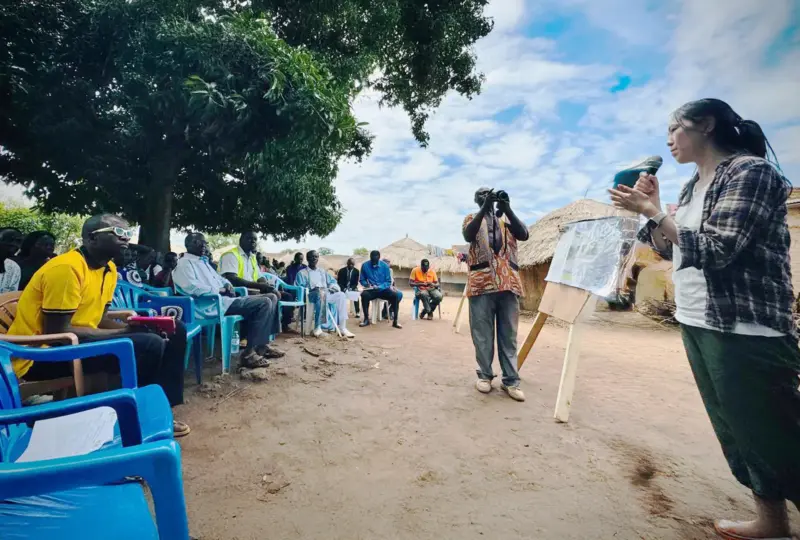
Takahashi leading community meetings for the bridge replacement project in Uganda
Provided by Takahashi
Q: How do you perceive the benefits and importance of I&D in the project?
Takahashi:
Having just one person like Ghosh who understands local customs and culture is a major strength. It makes it easier to gain trust, and facilitates smoother information gathering and communication. For example, when inquiries come from the local government, Ghosh handles them as a one-stop resource. Having diverse people on other projects is also a significant advantage.
Ghosh:
People around the world don’t all work in the same style, right? First, understanding the feelings and circumstances of local people makes it easier to produce results anywhere. And by working with diverse people and incorporating varied ideas, projects progress smoothly.
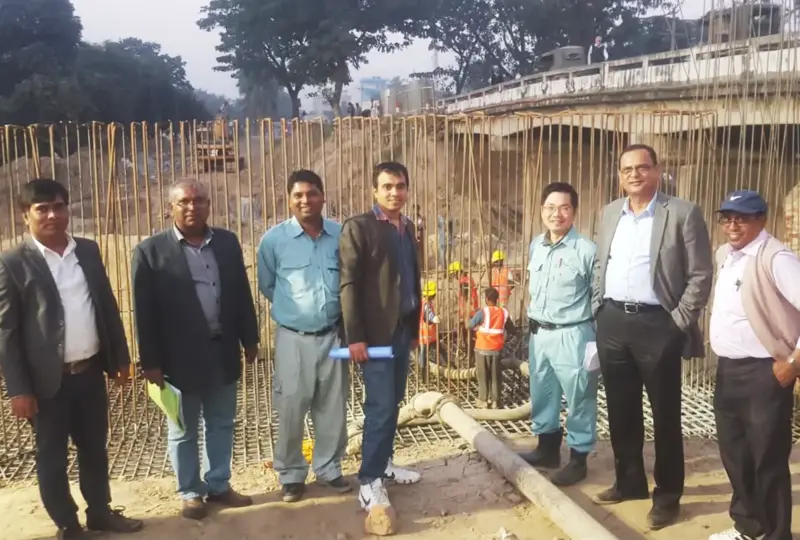
Ghosh (third from left) visiting the site in Bangladesh with the client and construction company
Provided by Ghosh
Suzuki:
Once a project enters the construction phase, we must advance the work in coordination with contractors and many local stakeholders. For example, suppose a contractor informs us, “The ground is softer than the design drawings indicate, so additional work is required.”
Additional construction work incurs costs that become the client’s responsibility, requiring careful evaluation. Sometimes it is questioned whether it stems from a design error by the consultant, making contractual and technical dialogue indispensable and necessitating more persistent communication.
Simply exchanging emails and documents won’t work. Opening up and having face-to-face conversations is especially crucial in project management. Looking back now, I realize we’ve been doing work that involves local people and values I&D.
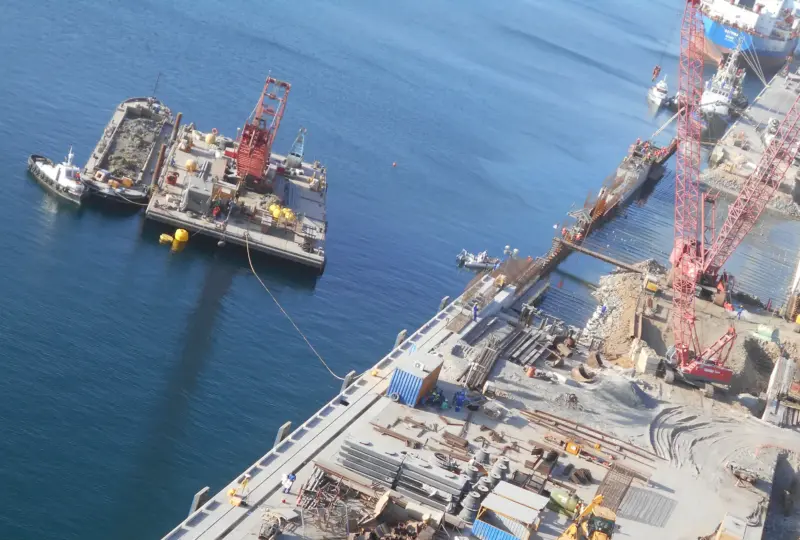
The port construction site in Mozambique, managed by Suzuki. Communication with contractors and local engineers is essential.
Provided by Suzuki
Topic 2
“We want to build roads where humans and elephants can coexist” — a foundation for accepting differing opinions
Q: Was I&D already well-established within the company? Does having team members with different areas of expertise and backgrounds make things difficult?
Suzuki:
Back in the day, we had many teams comprised solely of senior male employees. In those teams, individuals would stubbornly stick to their guns, and coordination often broke down. It’s hard to imagine now, but extreme examples included childish quarrels like “I won’t fly on the same plane as that person”… Today, we strive for balanced team composition without fixating on age, gender, or personality traits.
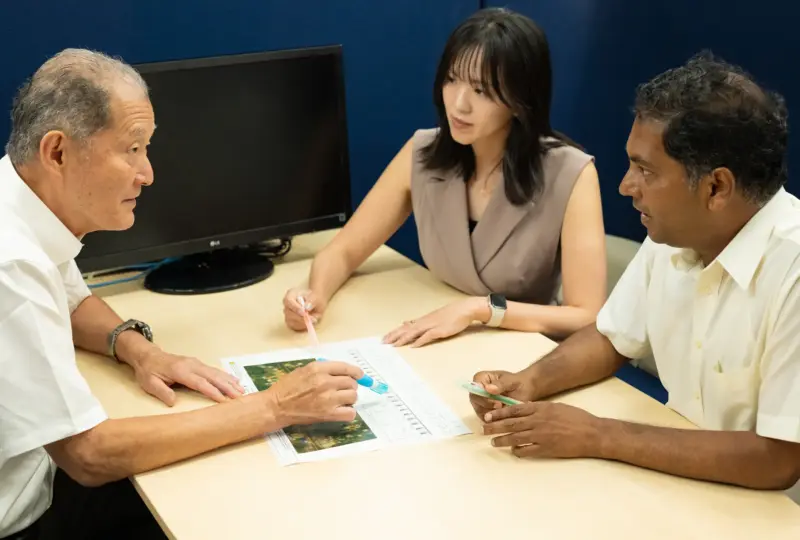
Now, we are successfully guiding projects to completion through balanced team composition.
Photo by Yuuko Kawashima
Takahashi:
That’s right. I feel that because we’ve cultivated an environment where diverse people regularly engage in conversation, differing opinions are accepted. Fundamentally, my field of environmental and social considerations inevitably has areas where interests conflict with those of engineers.
For example, when planning roads in areas where wildlife like elephants live nearby, as the environmental coordinator I might suggest, “Let’s build an elevated road structure (bridge type) so elephants can migrate safely.” But from the perspective of the engineer responsible for the overall plan, they might say, “That’s too expensive.”
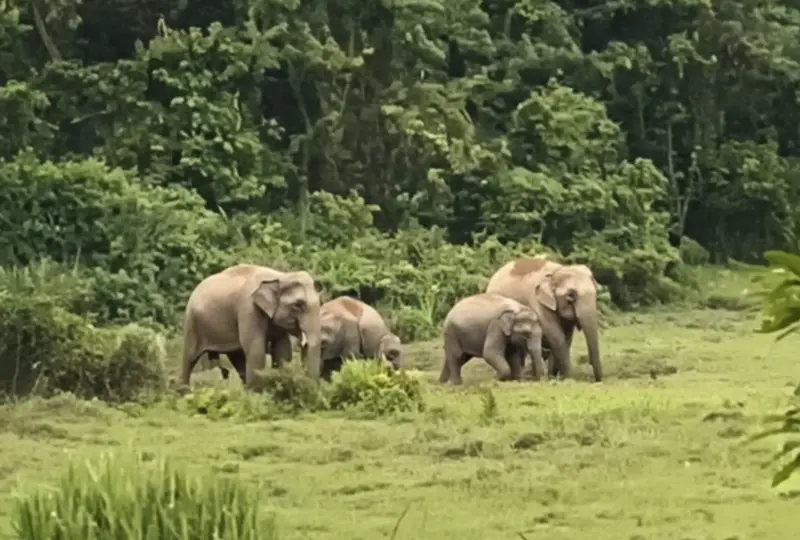
The project requires consideration for wildlife such as elephants, while cost management also remains a critical challenge.
Provided by Takahashi
Resident relocation is also a very difficult issue. While simply widening roads can reduce construction costs, it significantly impacts surrounding residents, and carries the risk of opposition movements. Among problems like this, people accustomed to differing opinions have a foundation to accept them as discussions rather than arguments.
Ghosh:
We need to respect opinions from various fields, and optimize accordingly. While we can’t incorporate every single opinion, we won’t know which ones are truly important unless we listen to everyone’s views and discuss them, right?
Topic 3
Recruiting diverse talent, and creating a comfortable working environment
Q: How do you attract diverse talent like that and maintain a comfortable working environment? Also, what kind of people would you like to work with going forward?
Takahashi:
Our company is proactive in hiring talent within the industry, and we recently hired approximately 20 new graduates. We also conduct year-round career hiring. Even if your major is different, if you’re interested, we hire not only for technical positions, but also for sales and administrative roles.
I originally studied international relations. Environmental issues like water quality and flora and fauna fall under the science field, so I didn’t understand them very well at first, but I’ve learned through on-the-job training and domestic assignments after joining the company.
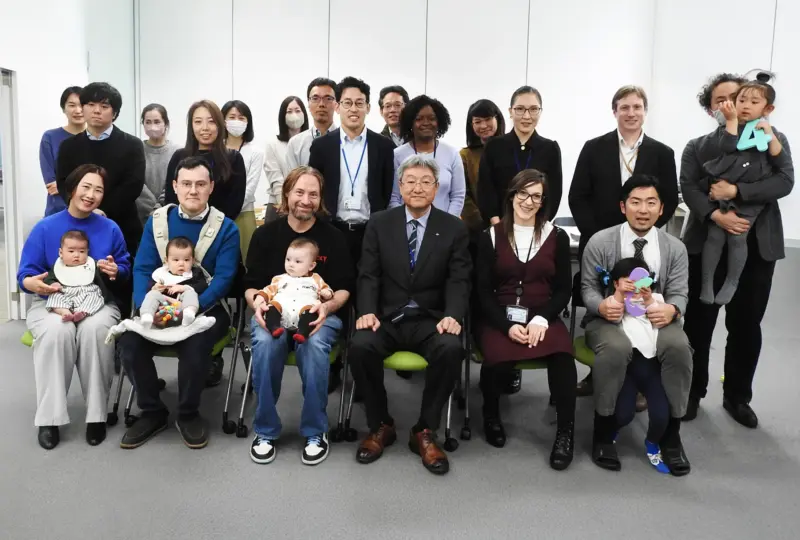
As a forum for information exchange among employees raising children, OC Global regularly holds roundtable discussions.
Provided by OC Global
At OC Global, some employees take leave to pursue master’s or doctoral degrees domestically or abroad, while others work at external institutions and then return to leverage that experience in their roles. The male paternity leave acceptance rate is approximately 80%, and we are building systems that enable diverse individuals to maintain work-life balance.
Suzuki:
I try to give younger employees opportunities to travel as much as possible, telling them, “Since you have this chance, why not take some time to sightsee?” Experiencing the food, culture, and interactions with locals in a foreign country are unique joys of overseas assignments, so I actively foster that kind of atmosphere. If they can truly enjoy themselves, it will also benefit their work.
Even moreso, a key feature of OC Global is that project managers are granted significant discretion over matters such as project budgets and personnel management. While the responsibility is substantial, it allows projects to proceed flexibly and freely.
I want to work with people who think, “It would be great if our technology could be utilized overseas too.”
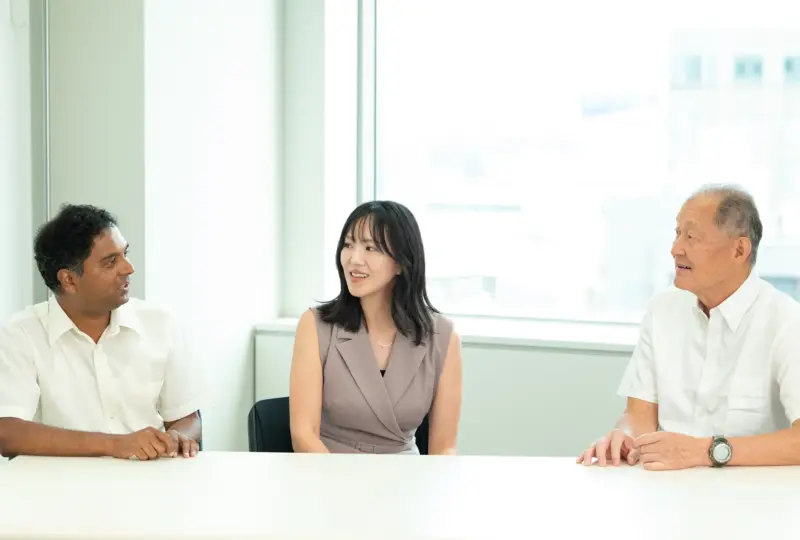
Photo by Yuuko Kawashima
Ghosh:
Japan has a lot of technological advancements, and I want to work with people who think, “It would be great if our technologies could be utilized overseas too.” If you have that mindset, your interests will naturally expand to thinking, “I should learn more about other countries,” and we can grow together.
Takahashi:
As an organization, we aim to explore new areas beyond traditional ODA, such as new business investments and private-sector projects. We want people who respect differences and have a willingness to learn. I believe learning not only about specialized fields, but also about languages and cultures contributes to project success and creating a comfortable working environment.
OC Global is a consulting firm handling numerous international projects including ODA. They say that valuing I&D both internally and externally, and respecting differences, is essential for project success.
For details on Oriental Consultants Global I&D, click here
(Photography: Yuuko Kawashima)